




Free strategy consultation?
Book an intro call →

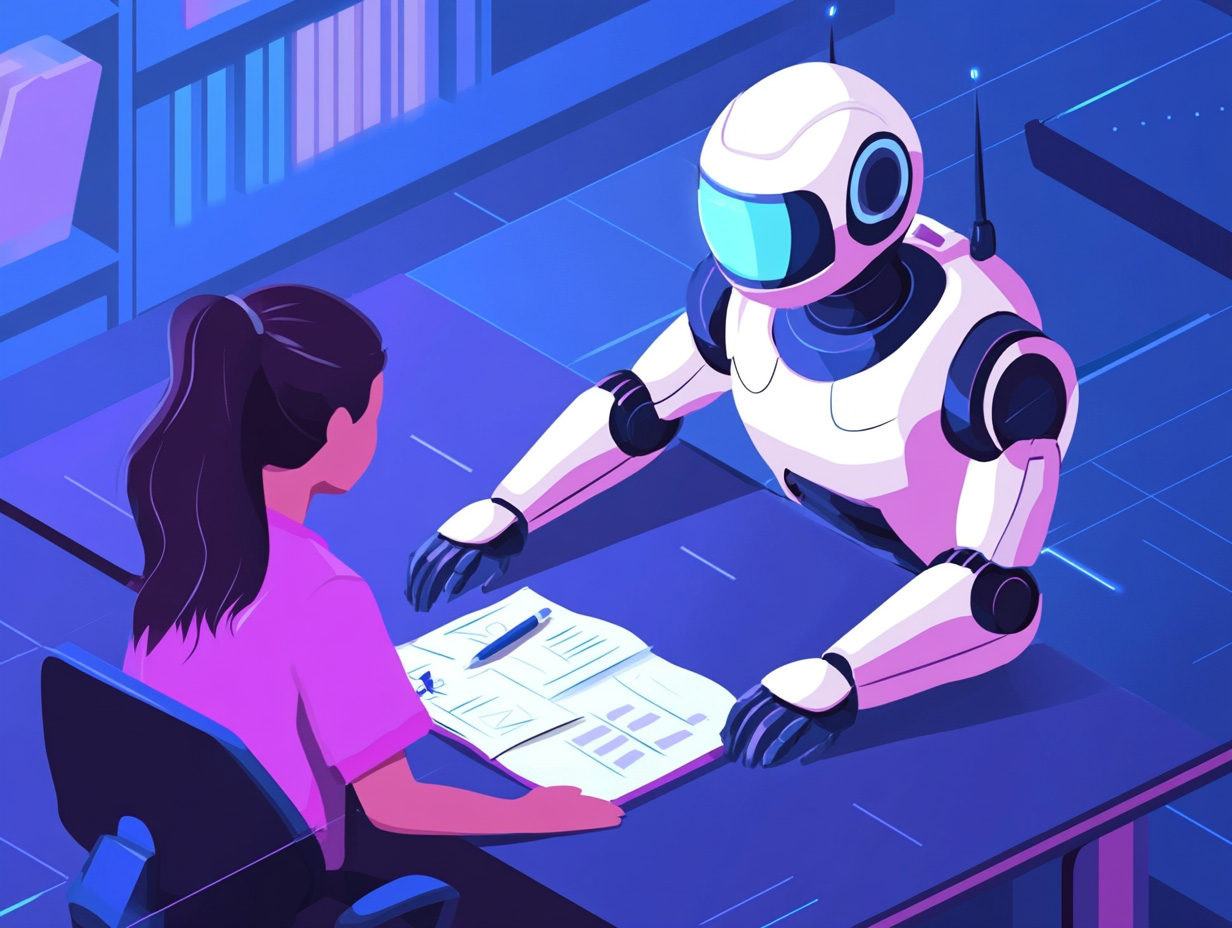
Whether at school or at work, artificial intelligence is finding more and more areas of application, and it hasn't stopped short of the learning process either. In our age of digitalization, learning is being simplified and made more efficient through artificial intelligence. Pupils and students alike benefit from intelligent homework helpers that offer them tailored support and can boost their performance.
Thanks to advanced technology, individual learning needs are recognized and teaching content is adapted accordingly. Artificial intelligence makes it possible for homework not only to be completed faster, but also to be understood better. Personalized exercises, learning plans, and automatic feedback are just some of the ways artificial intelligence supports the learning process.
With this new kind of homework help, pupils can reach their full potential and overcome learning difficulties. Artificial intelligence ensures that learning becomes more effective, more interactive, and more personalized.
Discover in this article how artificial intelligence helps students get the most out of their learning process and how it is revolutionizing the education sector.
Artificial intelligence (AI) refers to the ability of machines to simulate human-like intelligence in certain areas. AI systems can analyze data, recognize patterns, draw conclusions, and make human-like decisions. AI algorithms are developed through machine learning and neural networks to solve problems and perform tasks.
In education, AI is used to improve learning processes and offer learners individual support. By using AI, educational institutions and learners can benefit from personalized learning approaches and intelligent learning tools.
The use of artificial intelligence in education has increased in recent years. AI is used in various areas, including creating personalized learning plans, providing automated feedback, and identifying individual learning needs. Teachers and learners can use AI tools to optimize the learning process and foster students' understanding.
By using AI in education, teachers can save time and make lessons more efficient. AI systems can process large amounts of data and derive insights from it that help learners reach their full potential.
Using artificial intelligence for homework and learning offers a wide range of benefits. One of the main advantages is the ability to offer personalized learning approaches. AI systems can identify learners' individual strengths and weaknesses and adapt learning content accordingly. This allows pupils to learn at their own pace and deepen their understanding.
In addition, AI-driven homework apps and tools give learners the opportunity to receive automated feedback. This feedback can help them recognize and correct their mistakes, leading to a better understanding of the material. By using AI, pupils can also complete their homework more efficiently, since intelligent tools can help them organize and prioritize their tasks.
Another benefit of using AI for homework and learning is the ability to access a wide range of learning materials and resources. AI-driven platforms can give learners access to digital libraries, interactive exercises, and learning games that enrich their learning experience and boost their interest in learning.
There is a wide range of AI-driven homework apps and tools that can support pupils in their learning. These apps and tools offer personalized exercises, automated feedback, and individual learning plans.
A popular AI-driven homework app is, for example, "Socratic." This app uses machine learning to answer questions and find solutions to math problems. The app can also help learners organize and plan their homework.
Another example of an AI-driven learning tool is "Duolingo." This app uses AI to offer personalized language learning plans and support learners in learning a new language. The app offers exercises that adapt to the learner's individual language level, as well as automated feedback to measure learning progress.
A major benefit of artificial intelligence in education is its ability to personalize learning. AI systems can recognize the individual needs and learning styles of pupils and adapt learning content accordingly.
By using AI, teachers can create personalized learning plans that help learners reach their goals. AI systems can track learners' progress and adjust their learning activities to ensure they are challenged and can reach their full potential.
In addition, AI-driven platforms can offer learners personalized exercises and tasks tailored to their individual learning level. This allows pupils to learn at their own pace and ensures they fully understand the material.
When using artificial intelligence in education, there are also ethical considerations that must be taken into account. One of the main concerns is data privacy. AI systems collect and process large amounts of data about learners in order to offer personalized learning approaches. It is important to ensure that this data is stored and protected securely in order to safeguard learners' privacy.
Another ethical aspect is the transparency of AI algorithms. It is important for learners to understand how AI systems work and how they influence their learning activities. Transparency and education are crucial to ensuring that learners trust AI-driven tools and understand their results.
The use of artificial intelligence has led to a wide range of AI-supported learning platforms and systems. These platforms offer learners personalized learning content, interactive exercises, and automated assessments.
An example of an AI-supported learning platform is "Khan Academy." This platform offers free online courses on various topics and uses AI to offer learners personalized learning plans. The platform tracks learners' progress and adapts the learning content accordingly to ensure they learn effectively.
Another example is "Smart Sparrow." This platform allows teachers to create interactive learning modules driven by AI. Learners can use these modules to complete interactive exercises and deepen their understanding of the material. The platform also offers automated feedback to help learners correct their mistakes.
Artificial intelligence has the potential to revolutionize the future of learning. By using AI, teachers can create personalized learning plans that meet the individual needs and learning styles of pupils. AI-driven learning tools and platforms give learners the opportunity to learn at their own pace and ensure they fully understand the material.
In addition, AI enables continuous monitoring of pupils' learning progress. Teachers can track learners' progress and step in when needed to offer additional support. This can help learners reach their goals and achieve their full potential.
Integrating AI into the learning process can also help make learning more interactive and engaging. AI-driven platforms can offer interactive exercises, learning games, and multimedia content that capture learners' interest and improve their learning experience.
Besides supporting homework and learning, artificial intelligence is also used in other areas of education. For example, AI can be used to assess exams and tests. AI-driven systems can analyze and grade answers to ensure objective, consistent assessments.
In addition, AI is also used in developing educational software and learning materials. AI-driven algorithms can analyze and optimize learning content to meet learners' needs. This allows educational institutions to provide high-quality, personalized learning materials.
Artificial intelligence has the potential to revolutionize learning and transform the education sector. By using AI, teachers can create personalized learning plans and offer learners individual support. AI-driven homework apps and tools let learners complete their homework more efficiently and deepen their understanding of the material.
However, it is important to consider ethical aspects when using AI in education, including data privacy and the transparency of algorithms. Through responsible integration of AI, educational institutions can harness the benefits of this advanced technology while ensuring that learners' needs and rights are protected.
Overall, artificial intelligence offers immense opportunities to improve the way we learn and enrich the educational experience for pupils around the world.
There are several AI tools that can help with homework, including ChatGPT from OpenAI, which responds to a wide range of queries and generates answers. Another example is Socratic by Google, which helps students solve math and science questions.
ChatGPT and Socratic are two well-known AI tools that can support solving homework. They offer helpful explanations, answers to specific questions, and suggested solutions for various subjects.
Yes, AI can solve assignments, especially in areas such as mathematics, science, and languages. It can explain solutions, but it's important to use it as a learning aid rather than a substitute for one's own understanding.
The use of AI in schools depends on the policies of the respective institution. Some schools allow the use of AI as a learning aid, while others may restrict or ban its use to ensure academic integrity.
Teachers can, in some cases, detect the use of AI, especially when answers are generic or don't fit the assignment. There are also special tools that have been developed to identify AI-generated content.